Funny Set of Cartoon School Supplies: A Versatile Design Resource for Creators and Professionals
Whether you are a freelance graphic designer, a small business owner launching a product line, a teacher preparing classroom materials, or a marketer building a campaign around back-to-school themes, the quality of your visual assets can determine how your audience responds. A Funny Set of Cartoon School Supplies offers more than just cute imagery—it provides a structured, ready-to-use collection of vector illustrations that can be adapted across multiple formats and purposes. This type of resource fits naturally into the planning and production workflows of anyone who needs consistent, scalable, and engaging visuals without starting from scratch.
In this article, we will explore what this asset pack contains, how it integrates into real-world creative and business processes, and practical ways to implement it efficiently. The goal is to help you move from idea to finished product with less friction and more control over quality.
What the Funny Set of Cartoon School Supplies Includes
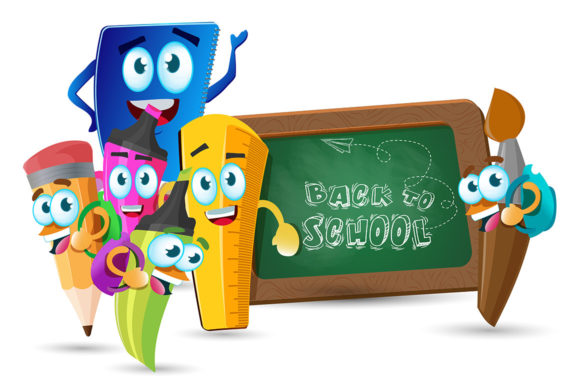
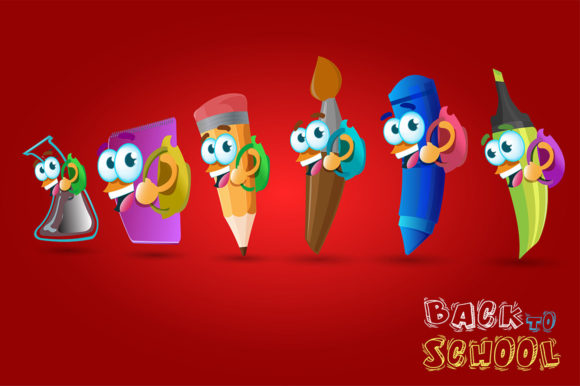
At its core, this product is a curated collection of cartoon-style school supply illustrations. Think of items like pencils, notebooks, erasers, rulers, backpacks, glue bottles, scissors, and other classroom staples—all rendered in a playful, kawaii aesthetic. The designs are intentionally whimsical, with rounded shapes, bright colors, and expressive faces that appeal to children and adults alike.
The package comes as a zip file containing multiple file formats:
- Vector files (AI, EPS, SVG) for scalable, editable artwork
- High-quality JPEG at 300 DPI for print-ready use
- SVG for web and digital applications
Having all four formats in one download means you can move seamlessly between tools like Adobe Illustrator, Canva, Inkscape, or even a web development environment. This flexibility removes the common bottleneck of format conversion and lets you focus on layout, color adjustments, and composition.
Where This Asset Fits in a Creative Workflow
Every project follows a general arc: idea, planning, asset gathering, production, review, and delivery. A vector illustration pack like this one fits most naturally in the asset gathering and production phases. Instead of spending hours drawing individual items from scratch, you can drop pre-made elements into your canvas, resize them without losing quality, and combine them with other design components.
For a freelance designer working on a school-themed t-shirt line, the process might look like this:
- Brief and research: Understand the brand voice and target audience.
- Asset selection: Browse the Funny Set of Cartoon School Supplies for relevant items.
- Editing and customization: Open the SVG or AI file, adjust colors to match brand guidelines, and rearrange elements.
- Composition: Layer the illustrations with text, logos, or other graphics.
- Export: Generate a high-res JPEG for print or an SVG for web mockup.
The same pack can serve a YouTube banner designer who needs playful accents around the channel name, or a blogger creating featured images for a post about back-to-school organization. In each case, the vector format ensures that scaling up for a banner or shrinking down for a business card remains sharp and professional.
T-Shirts and Apparel
When designing apparel, you need artwork that works at large sizes without pixelation. The EPS and AI files in this collection are ideal. Open the vector file in Adobe Illustrator, isolate the elements you want, and adjust the stroke weights to ensure they will hold up on fabric. Because the designs are funny and kawaii, they pair well with bold typography on cotton or blended garments. Keep in mind that colors may need to be simplified for screen printing—vector files make it easy to flatten and recolor.
Websites and Digital Platforms
SVG files are your best friend for web use. They are lightweight, scalable, and can be styled with CSS. If you are building a children’s game website or a back-to-school landing page, you can embed the SVGs directly into the HTML and change their colors on hover using a few lines of code. This reduces load time and avoids the need for multiple image assets. The 300 DPI JPEG versions are also useful for high-resolution hero images or blog post headers where you want a bit of texture and shading.
Invitations, Posters, and Print Collateral
For printed materials like birthday party invites, classroom posters, or promotional flyers, the 300 DPI JPEG delivers crisp output at standard print sizes. If you plan to print at larger dimensions (e.g., 24x36 inch posters), use the vector format to ensure edges remain clean. Before sending to the printer, convert all text to outlines (if using AI or EPS) to avoid font substitution issues.
Social Media and YouTube Banners
Platforms like YouTube, Instagram, and Facebook have specific dimension requirements. With vector files, you can create a single master composition and export it at multiple aspect ratios without redoing the layout. For example, you can design a YouTube banner that features a row of funny cartoon pencils and notebooks along the bottom, then reuse the same composition cropped for an Instagram post. The ability to export SVG also helps maintain a small file size for fast loading on social media profiles.
Mugs, Business Cards, and Merchandise
When creating physical products like mugs, notebooks, or business cards, the key is to align the artwork with the product’s shape and size. Vector files let you precisely position elements within a circular or rectangular template. For a mug, you might place a single large kawaii ruler character in the center, while a business card might use a small pencil icon as a subtle brand mark. Having the entire set available means you can test multiple combinations quickly to see what looks balanced.
How This Asset Interacts with Other Tools and Resources
No design works in isolation. A vector pack like this one is most powerful when combined with other assets and software. Here are a few natural integrations:
- Canva: Import the SVG files into Canva for quick drag-and-drop layouts. Canva supports SVG uploads, so you can recolor elements directly in the editor.
- Adobe Creative Suite: Use the AI or EPS files in Illustrator for advanced manipulation, then link them into InDesign for layout-heavy projects like magazines or brochures.
- Web builders: If you use WordPress, Squarespace, or Wix, you can upload SVG files directly into your media library and insert them into pages. Some builders also allow CSS animation, so you can make a cartoon pencil bounce or wiggle on the screen.
- Print-on-demand platforms: Services like Printful, Redbubble, or Teespring accept vector uploads. Submitting the EPS or AI file ensures that designs are printed at the highest resolution regardless of the product size.
If you work with a team, the zip file can be shared via cloud storage, and everyone can access the same set of assets. This maintains consistency across marketing collateral, product packaging, and social media—especially valuable for brands with multiple contributors.
Preparation and Organization
Before you start designing, take a few minutes to unzip the folder and rename the files in a way that makes sense for your project. For example, group items by category: writing tools, measuring tools, storage items, etc. This small upfront investment saves time when you are in the middle of a deadline and need to find a specific element.
Compatibility and Version Control
Vector files created in newer versions of Adobe Illustrator may not open fully in older versions. If you are collaborating with someone using an earlier release, export a copy as EPS (which tends to have broader backward compatibility) or as SVG (which is universally supported in modern browsers and many design tools). Always keep a master file in the native AI format for your own edits, and generate derivative formats as needed.
Usability and Customization
The illustrations come with predefined colors and strokes. While they work well out of the box, you may want to adjust the palette to match a specific brand. Because the files are vector, you can select individual shapes and apply new fills or strokes without degrading the artwork. If you plan to use the same set across multiple projects, consider creating a color swatch library in your design software that corresponds to your brand guidelines. Then apply it globally to all elements from the pack.
Efficiency and Scalability
One of the biggest advantages of a vector illustration set is that you can reuse elements across dozens of products without recreating them. A single pencil character can appear on a t-shirt, a mug, a website icon, a poster, and a business card. Over time, this builds visual recognition with your audience. To maximize efficiency, keep a master file where you store all the individual items as separate layers or symbols. When you need a new composition, simply copy and paste from the master file.
Quality Control
Always preview your final output at the intended size before committing to a print run or publishing online. For print, zoom to 100% and check for jagged edges or color banding. For digital use, test the SVG in a browser to ensure it renders correctly across different screen sizes. If you notice any issues, the vector file gives you full control to fine-tune anchor points and curves.
Long-Term Use and Asset Management
After you finish your first project using the Funny Set of Cartoon School Supplies, you will likely realize how much time it saved compared to drawing custom illustrations. Over the long term, treat this pack as a foundational library that you can build upon. As your brand evolves, you can modify the existing elements or combine them with other vector packs to create a unique visual language.
Storing the zip file in a dedicated folder on your cloud drive or local server ensures you can find it months later when you need to update a product or launch a new campaign. Consider tagging the folder with relevant keywords like “school,” “cartoon,” “kawaii,” and “vector” to make search quick. If you work with a team, create a shared asset library with clear naming conventions so everyone pulls from the same source.
Final Observations on Integration
What makes this vector set valuable is not just the quality of the illustrations, but the way it fits into existing workflows without requiring extra steps. The availability of SVG, AI, EPS, and JPEG means you rarely have to convert file types. The high-resolution JPEG handles print needs, while the vector formats cover everything from billboards to favicons. For creators who need to produce consistent, playful school-themed designs quickly, this pack reduces friction and lets you focus on the creative decisions that matter most—composition, messaging, and brand alignment.
Whether you are designing for a classroom bulletin board, launching a line of back-to-school merchandise, or building a website for educational games, a single download can serve as the visual backbone for many projects. By understanding how to prepare, customize, and deploy these assets across different media, you can move through your production pipeline with fewer interruptions and better results.