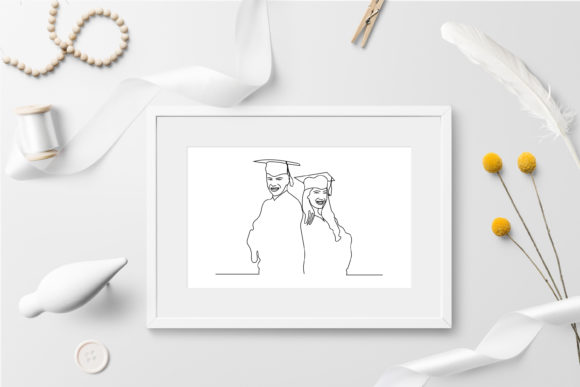
Continuous Line Drawing Graduates: A Minimalist Approach to Academic Design
When you need visual content that communicates achievement, transition, or academic milestone, the imagery you choose carries weight. Among the many styles available, one approach has gained steady attention: continuous line drawing graduates. This aesthetic strips away detail, leaving only the essential flow of a single unbroken stroke. It is a deliberate departure from the complex, layered illustrations that fill most stock libraries. Whether you are designing a diploma announcement, building a graduation slideshow, or creating marketing collateral for an educational institution, understanding what this style offers—and where it may fall short—can help you make a more informed choice.
What Defines Continuous Line Drawing Graduates
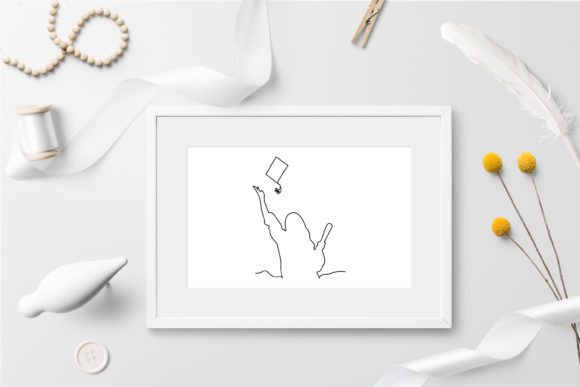
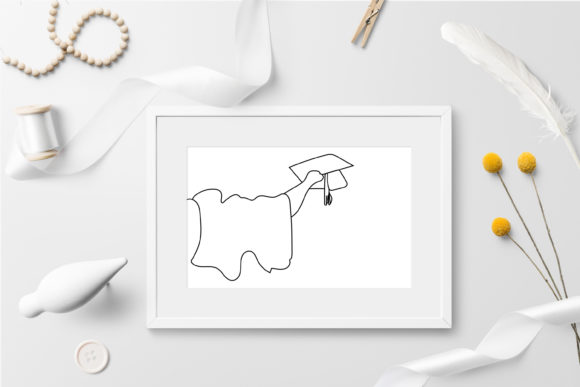
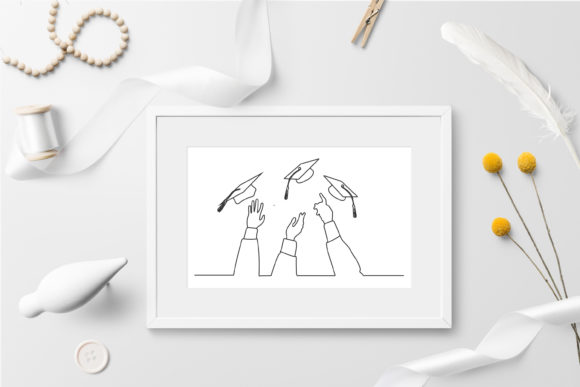
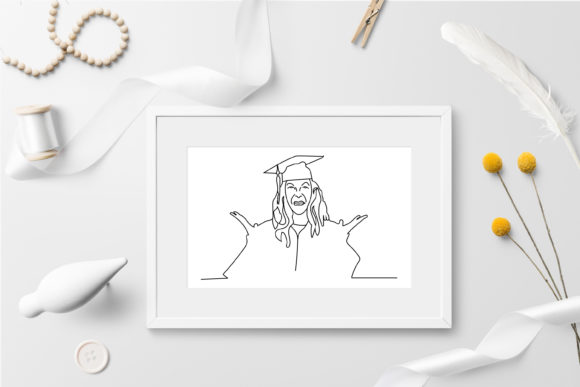
Continuous line drawing graduates refer to illustrations where the entire figure—typically a graduate in cap and gown, often with a diploma—is rendered in one uninterrupted line. The line curves and loops, capturing the silhouette without lifting the pen. The result is a minimalist, linear stylized image that feels modern, unrestrained, and almost meditative. This is not a photographic representation nor a detailed vector with shading and gradients. It is an exercise in reduction: can you convey the idea of a graduate with the fewest possible marks?
What makes this style distinct is its balance between abstraction and recognition. The viewer immediately identifies the graduation cap, the flowing gown, and the rolled diploma, yet the image retains a hand-drawn, personal quality. Unlike a precise icon or a highly rendered illustration, continuous line drawings carry a sense of movement and spontaneity. They do not try to capture every button or fold. They trust the viewer to fill in the gaps.
How It Compares with Other Graduation Illustration Styles
When you place continuous line drawing graduates alongside other common styles, the differences become clear. Consider the traditional vector icon: sharp, symmetrical, and often flat-colored. That style works well for buttons, app interfaces, or school logos where clarity at small sizes matters. It is predictable and consistent, but it can also feel generic. At the other end of the spectrum, you have detailed illustrations with multiple colors, gradients, and realistic proportions. These are powerful for large-scale prints or hero images, but they require more time to customize and may not align with a minimal brand identity.
Continuous line drawings sit in a middle space. They are more expressive than icons and less demanding than full illustrations. They suit brands that value simplicity, authenticity, or a creative edge. For example, a university admissions page might use a continuous line graduate to evoke the start of a journey, while a formal diploma certificate might still call for a more traditional emblem. Neither is better in an absolute sense; the right choice depends on context, audience expectations, and the medium you are working with.
Strengths of the Continuous Line Approach
The most obvious advantage is visual clarity. A single line eliminates noise. When you place a continuous line drawing graduate on a webpage, business card, or social media post, it reads instantly. There is no background clutter, no complex shading to parse. This makes it particularly effective in environments where attention spans are short, such as mobile feeds or event schedules.
Another strength is adaptability. Because the line is simple, it can be resized, recolored, or rotated without losing integrity. The vector format, especially in files that offer multiple output options such as SVG, AI, EPS, PDF, PNG, JPG, and DXF, means you can use the same graphic across print, web, and digital signage. You are not locked into a single use case. With a well-organized layer structure, you can also isolate the line from the background or adjust parts of the illustration without redrawing everything.
There is also an emotional dimension. Continuous line drawings often feel more human than rigid icons. The slight irregularities in the line suggest a hand at work, even when the file is fully digital. This can make a brand feel more approachable. For a school or educational program that wants to communicate creativity alongside achievement, this style can reinforce that message without saying a word.
Tradeoffs and Limitations to Consider
No style is universal, and continuous line drawing graduates have limitations. The most common challenge is legibility at very small sizes. If you shrink the image to a favicon or a small button, the line may become too thin to distinguish the cap from the gown. In those scenarios, a solid icon with thicker strokes may perform better. Similarly, if your audience expects a more formal or traditional look—such as for an academic conference or a university seal—the loose, minimalist quality may feel out of place.
Another tradeoff is the limited visual information. Because the drawing relies on silhouette, it cannot easily represent diverse details like facial features, different hair styles, or variations in cap adornments. If your project requires representing multiple graduates with distinct identities, you may need a different approach. Some designers solve this by using multiple continuous line drawings in a series, each slightly varied, but the style inherently leans toward generalization rather than individualization.
Color flexibility is also worth noting. While a single line can be any color, the effect is most powerful when kept simple. Adding multiple colors or gradients can undermine the minimalist appeal. If your brand palette requires complex color schemes, this style may be harder to integrate than a more versatile icon set.
When Continuous Line Drawing Graduates Is the Right Choice
Consider this style when your project prioritizes a clean, modern aesthetic over intricate detail. It works well for:
- Save-the-date cards and graduation announcements where you want the focus on the event, not on elaborate decoration.
- Website hero sections or landing pages for courses, workshops, or alumni programs that aim for a calm, welcoming tone.
- Social media templates where consistency across different sizes matters and where you need a graphic that scales from story to post.
- Stationery items like thank-you notes or program covers where a handcrafted feel adds sincerity.
- Presentations or slide decks where each slide needs a visual anchor without distracting from the spoken content.
Because the files are provided in multiple formats with high resolution (300 DPI at 3000×2000 pixels), you can use them for both digital and print applications without reordering. The SVG format gives you control in web workflows, while the AI and EPS files allow deeper editing in professional design software. For quick use, the PNG and JPG versions are readily available.
When You May Need a Different Option
If your project requires showing specific academic regalia—such as hood colors for doctoral robes or institutional symbols on the cap—a continuous line silhouette may not provide enough detail. Similarly, if you are designing a complex infographic or a poster with multiple visual elements, the minimalist line might get lost among other graphics. In those cases, a more detailed vector or a photographic approach would serve better.
Another situation to reconsider is when your audience expects literal representation. For example, a parent ordering a custom portrait of their graduate may want something that captures a specific pose or expression. A continuous line drawing, by its nature, abstracts the figure. It is an interpretation, not a likeness. If the goal is personalization, a custom illustration or photograph is more appropriate.
Budget and timeline are also factors. Continuous line drawing sets, especially those with organized layers and multiple file formats, offer a cost-effective, ready-to-use solution. Commissioning a custom continuous line illustration for each project takes time and money. If you need a quick, professional result without the back-and-forth of a custom brief, a pre-made set gives you a strong starting point with immediate download.
Practical Considerations for Selection
Before you choose, examine the specific files included. A set that provides AI, EPS, SVG, PDF, PNG, JPG, and DXF covers almost every workflow. AI and EPS allow you to edit the vector paths yourself, which matters if you need to adjust the line thickness or combine it with other graphics. SVG is essential for web use, especially if you want to animate the line drawing or scale it responsively. DXF expands the usability to CAD or cutting machine projects, which might be relevant for physical decorations or signage.
Color mode and resolution also matter. RGB color mode with 300 DPI and a canvas size of 3000×2000 pixels means you can print at good quality up to about 10×7 inches without interpolation issues. For larger prints, such as posters or banners, you would need to scale the vector file, which is where the AI or EPS format becomes critical. Always verify that the files match your intended output medium before committing.
Evaluating Fit Within a Broader Design System
Think about how this style interacts with your existing brand assets. If your typography, icons, and photography all lean toward clean, minimal design, a continuous line graduate will integrate seamlessly. If your brand uses rich textures, layered graphics, or vibrant imagery, the single-line style may feel isolated unless you use it as a deliberate contrast accent. In some cases, pairing the line drawing with a soft color wash or a subtle texture behind it can bridge the gap between minimal and elaborate.
Consistency across a series of graphics is another factor. If you are creating a year-long campaign for an educational program, you might want multiple icons in the same continuous line style: a book, a globe, a graduation cap. A set that includes only the graduate may need to be supplemented with other assets. Some designers will commission a custom set to maintain consistency, while others will mix styles and rely on spacing and color to create cohesion.
Ultimately, the decision comes down to the story you want to tell. Continuous line drawing graduates tell a story of simplicity, movement, and possibility. They do not claim to show every detail of the achievement. Instead, they invite the viewer to imagine the rest—the ceremony, the future, the next step. That can be a powerful asset when used intentionally and placed in the right context.
Making Your Choice with Confidence
When comparing continuous line drawing graduates with other illustration options, resist the urge to treat style as a one-size-fits-all decision. Instead, ask: What mood am I trying to create? Where will this image be seen? How much customization do I need? Which file formats support my workflow? The answers will guide you toward the approach that fits your specific project.
Do not underestimate the value of a well-organized file. Whether you are a professional designer handling multiple projects or a school administrator preparing materials for a commencement ceremony, having clean layers and multiple format options saves time and reduces frustration. A set that offers easy customization through organized layers and resizable vector files is not just a purchase—it is a resource you can reuse across different contexts.
And if you are unsure, start small. Use a continuous line drawing graduate in one application, such as a social media post or a program cover. Observe how your audience responds. If the feedback leans positive, expand its use. Design choices do not have to be final. The best digital assets are the ones that remain flexible as your needs evolve.