Continuous One Line Drawing a Graduate S: Strategic Minimalism for Education Branding
Visual communication in the education space has evolved far beyond stock photography and clip art. Professionals seeking clean, intentional design increasingly turn to continuous one line drawing a graduate S — a single uninterrupted stroke that forms a stylized graduate silhouette, often paired with a graduation cap and diploma. This minimalist approach strips away unnecessary detail, leaving only the essential shape. For entrepreneurs, marketers, educators, and content creators, understanding when and how to use this style can sharpen brand identity, streamline visual messaging, and support long-term communication goals.
What Makes Continuous One Line Drawing a Graduate S Distinctive
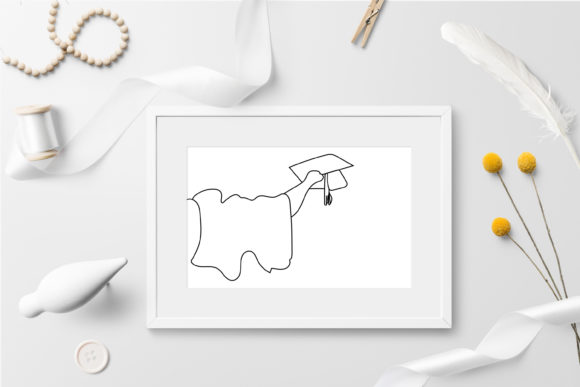
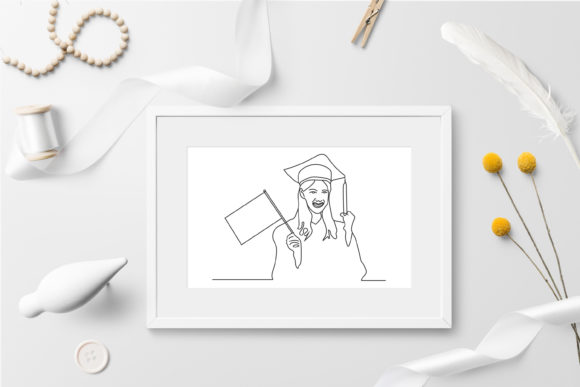
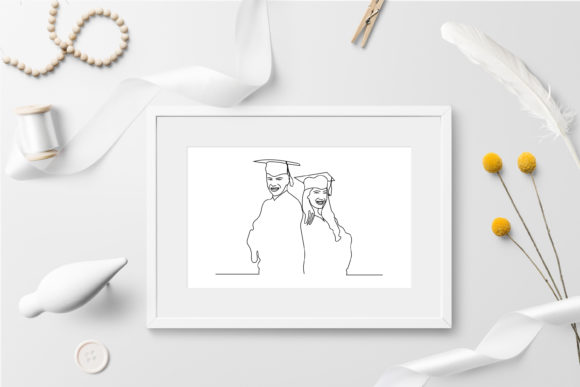
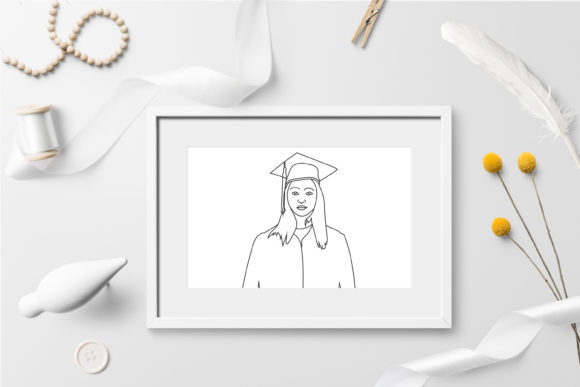
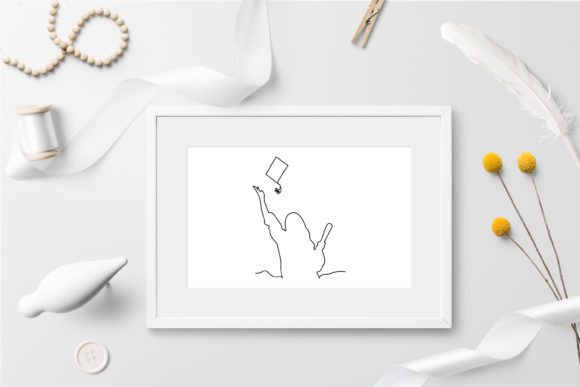
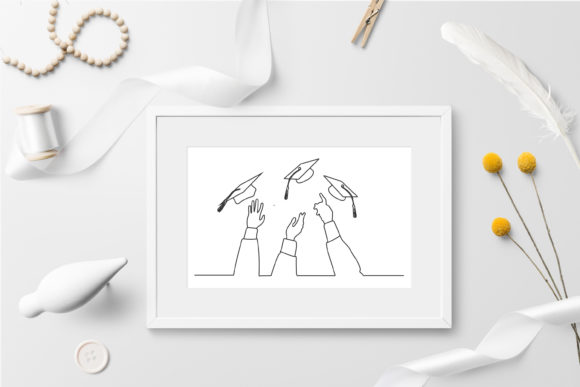
A continuous one line drawing is not a sketch with multiple overlapping strokes. It is a single, unbroken line that defines the entire figure. In the case of a graduate S design, the line traces the profile of a graduate — the cap, the gown, the diploma — in one flowing motion. The result is a silhouette that feels both spontaneous and deliberate.
This visual approach aligns with contemporary preferences for minimal, scalable, and adaptable graphics. Because the line is continuous, the image retains a handcrafted quality even when rendered digitally. That balance between human touch and digital precision makes it particularly effective for brands that want to communicate authenticity without sacrificing professionalism.
The files described — JPG, PNG, SVG, DXF, PDF, AI, and EPS — offer multiple layers of utility. SVG and EPS formats ensure that the vector remains crisp at any size, while PNG provides immediate use for web content. DXF files open up possibilities for laser cutting or physical signage, and AI files allow full customization in Adobe Illustrator. For a small business owner or freelancer building an education-related brand, this range of formats removes technical barriers and speeds up production workflows.
Strategic Value for Branding and Positioning
Branding decisions often hinge on clarity. A continuous one line drawing a graduate S communicates achievement, transition, and growth without relying on complex imagery or text. That simplicity can be a strategic advantage when your audience is scanning content quickly — on a website header, a social media post, or a printed brochure.
For example, a tutoring service might use this graphic as a logo element. The graduate silhouette immediately signals academic focus, while the line drawing style suggests approachability and modernity. A university marketing department could incorporate it into commencement materials or alumni communications. The minimal design avoids cluttering the page, allowing the message — not the graphic — to lead.
Positioning also benefits from consistency. When you have a set of 100 fully resizable vector files, you can maintain visual coherence across platforms. The same graduate S can appear on your website, your email templates, your presentation slides, and your physical merchandise. That repetition builds recognition, which is the foundation of effective branding.
Supporting Communication Goals with Minimal Visual Language
Communication goals vary by context, but most professionals aim for clarity, memorability, and emotional resonance. Continuous one line drawing a graduate S supports all three. The simplicity of the line forces the viewer to focus on the subject — the graduate — rather than decorative details. The flowing stroke can evoke a sense of movement, progress, or completion, which aligns naturally with graduation and achievement themes.
Consider a blogger writing about career transitions after college. Using this graphic as a featured image or section divider can reinforce the theme of forward momentum. A publisher creating a workbook for recent graduates might print the line drawing on the cover, using negative space to keep the design airy and inviting. In each case, the graphic does not distract. It complements.
The emotional tone matters too. A continuous line feels human and imperfect in a way that perfectly symmetrical shapes do not. That humanity can make your brand feel more relatable, especially if you are targeting audiences who value authenticity — such as parents of school-age children, adult learners returning to education, or nonprofit organizations focused on literacy and access.
When to Use Continuous One Line Drawing a Graduate S
Timing and context determine whether a graphic adds value or feels arbitrary. Here are several scenarios where this style works particularly well:
- Website hero sections and landing pages: A large, clean silhouette draws the eye without competing with headline text or calls to action.
- Social media profile images and banners: The simplicity scales down well on mobile screens and remains legible at small sizes.
- Print materials like flyers, posters, and certificates: The high resolution (300 DPI, 3000×2000 pixels) ensures sharp output even for large formats.
- Presentation slides and reports: A single line drawing can serve as a visual anchor without overwhelming data or key points.
- Merchandise such as notebooks, tote bags, or apparel: The vector files can be adapted for screen printing or laser engraving.
- Email headers and digital newsletters: PNG files with transparent backgrounds integrate cleanly into various email clients.
Each of these use cases benefits from the adaptability of the file set. Having AI, EPS, SVG, DXF, PDF, JPG, and PNG versions means you are not locked into one output method. You can design once and deploy across multiple channels without rework.
Practical Planning Tips Before You Use the Graphics
Jumping straight into design without a plan can lead to inconsistent visuals. Before you download and customize your continuous one line drawing a graduate S files, consider these planning steps:
- Define the primary message. What do you want your audience to feel or understand? If the graphic is for a graduation ceremony program, the focus might be celebration and accomplishment. If it is for a financial literacy course for graduates, the emphasis could be forward planning and responsibility.
- Choose a color palette that reinforces the message. The RGB color mode in the provided files gives flexibility for digital use. Black line drawings on white backgrounds are classic, but a single accent color can tie the graphic to your brand guidelines. For example, a navy line on a cream background conveys tradition, while a teal line on white feels fresh and modern.
- Test the line weight and scaling. Because the graphic is a single continuous line, too thin a stroke may disappear when printed small, while too thick a stroke may lose the detail of the cap and diploma. Open the AI or EPS file and adjust the stroke weight based on your intended output size.
- Consider negative space. The minimal style thrives on breathing room. Place the graphic in a layout that allows empty space around it. Crowding the image with text or other graphics reduces the impact of the line.
- Verify alignment with your brand voice. A continuous line drawing suggests creativity and simplicity. If your brand voice is formal or technical, this style might feel mismatched. Use it where the tone aligns, not just because the graphics look appealing.
Possible Risks of Using This Style Without Clear Goals
No design choice is risk-free. Relying on continuous one line drawing a graduate S without a clear strategy can create several problems:
- Visual monotony: If every piece of content uses the same graphic, audiences may stop noticing it. The line drawing becomes background noise rather than a meaningful visual cue.
- Misalignment with audience expectations: Some audiences — particularly older or more traditional stakeholders — may interpret minimal line art as unfinished or casual. In contexts like formal academic reports or legal documents, a more conventional graphic might be safer.
- Overuse across unrelated contexts: Using a graduation-themed graphic for content that has little to do with education or achievement can confuse your audience. The graphic carries semantic weight; place it where that meaning fits naturally.
- Technical pitfalls with scaling: While vector files are resolution-independent, improper export settings can lead to jagged edges or color shifts. Always test your output at the final intended size before publishing or printing.
These risks are manageable with intentional planning. The goal is not to avoid the style altogether, but to use it surgically — in the right contexts, with the right supporting design elements, and with a clear understanding of what it communicates.
How to Use Continuous One Line Drawing a Graduate S Intentionally
Intentional use starts with asking why. Why this graphic? Why now? Why in this format? If the answer connects to a specific goal — such as increasing brand recognition among recent graduates, or creating a consistent visual theme for a back-to-school campaign — then the graphic becomes a tool rather than a decoration.
One approach is to treat the continuous line drawing as a motif that recurs across a campaign. For example, a university’s admissions office might use the graduate S on inquiry forms, follow-up emails, and event banners. Each touchpoint reinforces the same visual idea, building a cohesive narrative about student success. The minimal style ensures that the motif does not overwhelm the content, allowing text and calls to action to remain prominent.
Another intentional use is as a metaphor in editorial content. A blog post about lifelong learning could pair the graphic with a headline about continuous growth. The line drawing visually echoes the concept of an unbroken journey. Readers may not consciously notice the parallel, but they absorb the thematic consistency.
For freelancers and small business owners, the customization potential is especially valuable. The AI file allows you to adjust the line, change colors, add background textures, or combine multiple line drawings into a larger composition. You are not limited to the original stroke; you can make the design your own while retaining the core silhouette.
Practical Examples Across Real-World Use Cases
Let’s look at four realistic scenarios where continuous one line drawing a graduate S serves a strategic purpose:
Example 1: An online course platform launching a new certificate program. The platform uses the graduate S as the certificate border or watermark. The single line reinforces the idea of completion and achievement. Because the graphic is in vector format, it scales perfectly whether the certificate is viewed on screen or printed on letterhead. The 300 DPI resolution ensures the line remains crisp even on glossy paper.
Example 2: A career coaching practice targeting recent graduates. The coach uses the line drawing on their website hero section, paired with a headline like “Your Next Move Starts Here.” The graduate silhouette immediately signals the target audience. The continuous line suggests a seamless transition from school to career. The coach can then carry the same graphic into their LinkedIn banner, email signature, and downloadable guides.
Example 3: A nonprofit organization promoting adult education programs. The organization uses the graduate S in flyers and social media ads. The minimal style keeps production costs low — no need for custom photography or complex illustrations. The SVG and EPS files allow volunteers with basic design skills to resize and recolor the graphic without expensive software. The consistent visual identity helps the nonprofit appear professional and credible even with limited resources.
Example 4: A publisher creating a series of graduation-themed journals and planners. The line drawing serves as cover art. The continuous stroke creates an elegant, uncluttered look that appeals to buyers seeking minimalist stationery. The DXF file allows the publisher to offer laser-engraved covers for premium editions. The same graphic in PNG format works for product listings on e-commerce platforms.
Long-Term Value of a Consistent Visual Asset
Investing in a well-organized set of vector files pays dividends over time. Unlike stock images that may go out of style or require repeated licensing, a continuous line drawing a graduate S can remain a permanent part of your visual library. The minimal style tends to age well — it does not depend on trends like gradients, drop shadows, or decorative fonts. A single line is timeless.
Furthermore, having all files in one collection — AI, EPS, SVG, DXF, PDF, JPG, PNG — reduces future friction. When you need to update a brochure or redesign a website, you can open the original file and make changes without starting from scratch. The well-organized layer structure in the AI file saves time when you need to isolate or modify specific elements.
For teams, this efficiency matters. A marketer can request a color change from a designer without waiting for a full redraw. A freelancer can hand off files to a client with confidence that they will open correctly in various software. The professionalism of the file organization reflects on the overall quality of your work.
Decision-Making Guidance: Is This Right for Your Project?
Before purchasing or using continuous one line drawing a graduate S, weigh these factors:
- Audience relevance: Does your audience connect with graduation, education, or achievement themes? If yes, the graphic will resonate. If your content is unrelated to these themes, consider a different visual.
- Design environment: Are you building a minimalist brand? The clean line style fits best in layouts with plenty of white space and simple typography. Cluttered designs may diminish the impact of the line drawing.
- Technical comfort: Do you have access to software that can edit AI, EPS, or SVG files? If not, the PNG and JPG versions still provide usable graphics, but you will lose some customization flexibility.
- Scalability needs: Do you need the same graphic across print, web, and physical products? The variety of formats makes this easy. If you only need one format, you still benefit from having backups and alternatives.
- Budget and time: How much time can you spend on customization? The ready-made files save hours of design work compared to commissioning a custom illustration. For a solo entrepreneur or small team, that efficiency is valuable.
If the answer to most of these questions leans positive, the continuous one line drawing a graduate S is a sound strategic choice. If not, it may be worth exploring other visual styles that better match your context.
Final Thoughts on Using This Minimal Education Graphic
Continuous one line drawing a graduate S is more than a decorative clipart. It is a deliberate design tool that can strengthen branding, clarify communication, and support long-term visual consistency. The minimalist style appeals to modern audiences who value authenticity and simplicity. The comprehensive file formats — from AI to DXF — ensure that you can adapt the graphic to nearly any medium without technical roadblocks.
The key is intentionality. Define your message, plan your layout, test your outputs, and use the graphic where it reinforces your goals. Avoid the temptation to treat it as a default visual for any education-related content. When applied thoughtfully, a single continuous line can carry more meaning than a hundred disconnected shapes.