Exploring the Power of the Knowledge Universe Concept Illustration in Modern Education and Design
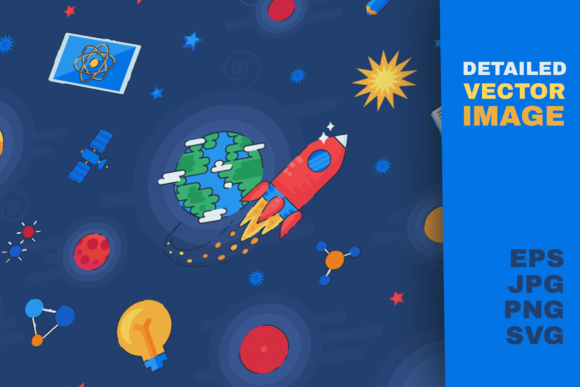
Visual storytelling has become a cornerstone of how we communicate complex ideas, especially in the fields of education and technology. Among the most engaging and versatile approaches to this is the Knowledge Universe Concept Illustration, a creative fusion of cosmic space elements with traditional and digital school symbols. Think about it: a flying rocket alongside a pencil, a satellite orbiting a chemical flask, or a glowing lamp illuminating a stack of books against a backdrop of stars and planets. This isn’t just a pretty picture—it is a carefully crafted visual metaphor that speaks directly to the journey of learning, discovery, and exploration. Whether you are designing a banner for an online course, creating social media content for a school event, or building a website for an educational platform, this illustration style offers a rich, intuitive way to connect with your audience.
What Exactly Defines a Knowledge Universe Concept Illustration?
At its core, this illustration style blends two seemingly distinct worlds: the vast, mysterious cosmos and the structured, purposeful realm of education. The result is a visual narrative that positions learning as an adventure. Instead of presenting a dry, static image of a classroom, the Knowledge Universe Concept Illustration uses elements like a flying rocket spacecraft, a cosmic shuttle, a satellite, planets, moons, and stars to represent the boundless possibilities of knowledge. Interwoven with these are familiar school symbols: an apple for tradition, a book for literature, a tablet for modern technology, a lamp for enlightenment, a video icon for multimedia learning, and a chemical flask for scientific discovery.
This combination is not random. The rocket symbolizes ambition and forward momentum—much like a student progressing through a curriculum. The satellite represents connectivity and the reach of online education. The chemical flask grounds the illustration in hands-on, experimental learning, while the tablet nods to the digital tools that have transformed how we access information. The planet and star elements evoke a sense of wonder and infinite possibility, suggesting that there is always more to learn, explore, and discover. This makes the concept particularly effective for audiences ranging from young children to adult learners, as it taps into a universal sense of curiosity.
The Vector Advantage: Flexibility and Quality
One of the most practical benefits of this illustration is that it is delivered as a vector graphic. The Knowledge Universe Concept Illustration typically includes files such as EPS 10, SVG, PNG with transparent backgrounds, and JPG. This file variety is crucial for modern designers and content creators. The EPS and SVG formats allow you to open the file in programs like Adobe Illustrator 10 (or newer) and edit every element without losing resolution. You can change colors, resize components, or remove certain objects to fit your specific project needs. The PNG files with transparent backgrounds are ideal for quick use on websites or social media where you need a clean overlay, while the JPG serves as a ready-to-use, high-quality image for print or digital display.
Why does this matter? Because real-world projects rarely fit a one-size-fits-all template. A banner for a Back To School sale might require a different composition than a poster for a chemistry workshop or a cover image for an online literature course. With vector files, you have the freedom to adapt the illustration to your exact dimensions and aesthetic preferences. This flexibility saves time and ensures that your visual branding remains consistent across different platforms—whether it is a web banner, a social media post, a flyer, or a website gallery element.
Practical Applications Across Industries and Projects
The beauty of the Knowledge Universe Concept Illustration lies in its adaptability. It is not confined to one type of media or audience. Here are some common and highly effective use cases where this visual style truly shines:
- E-Learning Platform Banners: If you run an online education site, this illustration immediately communicates that your courses are modern, engaging, and comprehensive. The combination of a rocket and a tablet suggests both innovation and accessibility.
- Back To School Marketing Campaigns: Schools, bookstores, and educational supply retailers can use these images to create exciting holiday greeting cards, sale banners, or social media posts. The playful flat cartoon style appeals to kids and parents alike.
- Scientific and Academic Posters: For conferences, workshops, or classroom decoration, the inclusion of the chemical flask, satellite, and book allows you to convey a multidisciplinary approach—covering chemistry, physics, literature, and mathematics in one cohesive image.
- Social Media Content: Square or vertical versions of the illustration work well for Instagram, Facebook, or LinkedIn posts. The space theme grabs attention while the school symbols reinforce the educational context.
- Website Galleries and Landing Pages: A hero image featuring a Knowledge Universe Concept Illustration can set the tone for an entire site, making visitors feel that they are entering a world of discovery and high-tech learning.
- Print Materials: Flyers, brochures, and even book covers benefit from the vibrant, flat design style. The high-resolution JPG and editable EPS ensure that print outputs are crisp and professional.
Why This Style Resonates with Modern Learners and Educators
Education has undergone a significant transformation in recent years. Distance education, internet studying, and online training are no longer niche options—they are mainstream. The Knowledge Universe Concept Illustration acknowledges this shift by visually blending traditional learning symbols (apple, book, lamp) with contemporary digital tools (tablet, video icon, satellite). This dual representation helps bridge the gap between what education was and what it has become. It reassures traditionalists that core values like literacy and scientific inquiry remain central, while simultaneously exciting tech-savvy learners about the possibilities of online and interactive study.
Moreover, the flat cartoon illustration style is intentionally friendly and approachable. It strips away unnecessary complexity and presents ideas in a clear, digestible format. This is particularly important when you are trying to capture the attention of younger students or individuals who may feel intimidated by rigorous academic imagery. The cosmic theme adds a layer of adventure and imagination, making the pursuit of knowledge feel less like a chore and more like an expedition. When a student sees a rocket flying past a planet with a book trailing behind it, the implicit message is: learning takes you places.
Key Elements and Their Symbolic Meanings
To fully appreciate and utilize the Knowledge Universe Concept Illustration, it helps to understand the symbolic weight of each component. Here is a breakdown of the most common elements and what they represent:
- Rocket and Spacecraft: Ambition, speed, progress, and the journey of discovery. They suggest that education propels you forward.
- Satellite: Connectivity, global reach, and the ability to access information from anywhere. Perfect for online and distance learning themes.
- Planets, Moon, and Stars: The vastness of knowledge, curiosity, and the unknown. They invite exploration and lifelong learning.
- Pencil and Book: Foundational literacy, tradition, and the basics of education. They ground the image in familiar school experiences.
- Apple: A classic symbol of knowledge, teaching, and healthy learning environments.
- Tablet and Video Icon: Digital literacy, multimedia learning, and the modern classroom. These represent the shift toward interactive and online education.
- Chemical Flask: Science, experimentation, and critical thinking. It emphasizes the hands-on, inquiry-based side of learning.
- Lamp: Enlightenment, ideas, and the light of understanding. It symbolizes the moment when a concept clicks.
When you combine these elements into a single composition, you create a rich, multilayered message that can be interpreted at a glance. This is incredibly valuable in today’s fast-paced digital environment, where users scroll through content quickly and need an immediate reason to pause and engage.
Practical Tips for Using the Illustration Effectively
If you are considering incorporating a Knowledge Universe Concept Illustration into your project, here are some actionable recommendations based on real-world design and marketing practices:
- Customize the Color Palette: The vector format allows you to adjust colors to match your brand identity. For a Back To School campaign, you might use brighter, warmer tones. For a high-tech online course, cooler blues and purples with neon accents can reinforce the digital and cosmic themes.
- Resize for Different Platforms: Use the SVG or EPS to create multiple versions—wide for website headers, square for social media posts, and vertical for mobile-friendly designs. The vector nature ensures that scaling does not affect quality.
- Combine with Text Strategically: The illustration is busy enough to stand alone, but it also works beautifully as a background for bold, short headlines. Place your title in a clear, open area of the cosmos (like near a planet or star cluster) to maintain readability.
- Use for Both Digital and Print: Because the file package includes both raster PNG and vector EPS, you can use the same design for a social media post and a printed poster without needing to recreate anything. This coherence strengthens brand recognition.
- Consider Your Audience: This style is particularly effective for K-12 education, college prep, online learning platforms, science museums, and educational toy companies. However, it can also work for corporate training programs if you want to convey a sense of innovation and growth.
Why This Illustration is Ideal for the Modern Educational Landscape
The shift toward distance education and internet-based studying has created a demand for visuals that are both inspiring and functional. A simple photograph of a classroom no longer captures the breadth of modern learning. The Knowledge Universe Concept Illustration fills this gap by representing education as a dynamic, borderless, and technologically integrated experience. It acknowledges that students today learn from a variety of sources—physical books, digital tablets, video tutorials, and hands-on experiments—all while being part of a global community connected by satellites and networks.
Furthermore, the flat cartoon style is timeless and trendy. It avoids the pitfalls of overly realistic imagery that can quickly look dated, and it steers clear of abstract minimalism that might fail to communicate the educational theme. This balance makes the illustration suitable for long-term use across multiple campaigns and seasons. Whether you are promoting a summer science camp, a fall literature seminar, or a year-round online learning subscription, the same basic illustration can be adapted with different text overlays or color tweaks to stay fresh and relevant.
Final Thoughts on Choosing a Knowledge Universe Concept Illustration
When you select a Knowledge Universe Concept Illustration for your project, you are choosing more than just a decorative image. You are investing in a visual language that communicates curiosity, innovation, and the boundless potential of education. It works because it aligns with how people intuitively think about learning—as a journey, an exploration, and an adventure. The inclusion of both classic school symbols and futuristic space elements ensures that the image resonates across generations, from young children just starting their educational path to adults pursuing lifelong learning.
From a practical standpoint, the variety of file formats (EPS, SVG, PNG, JPG) gives you complete control over how and where you use the illustration. You can edit it, scale it, and repurpose it without starting from scratch each time. Whether you need a banner for a Back To School sale, a cover image for a digital course, or a design element for a website gallery, this illustration delivers both aesthetic appeal and functional versatility. In a crowded digital landscape, having a visually compelling and symbolically rich asset like this can make the difference between a user scrolling past your content or stopping to engage with it.
The Knowledge Universe Concept Illustration is not just a trend—it is a reflection of how we now understand education: as a universe of ideas waiting to be explored, with the tools of both tradition and technology guiding the way. If you are looking to create content that inspires, informs, and connects, this illustration style deserves a prominent place in your creative toolkit.