First Day of Fifth Grade: What to Know Before You Cut, Print, or Sublimate
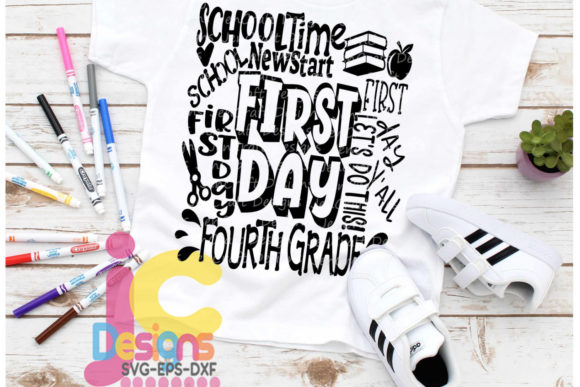
That first day of fifth grade marks a real milestone. It's the bridge between elementary school and the upper grades, and for many families, it's a moment worth celebrating with a custom shirt, a mug, a sign, or a keepsake. If you've been searching for First Day of Fifth Grade SVG files, you've likely come across a sea of options. Some are well-made. Others will cause you no end of frustration.
Let's walk through the practical side of choosing, using, and applying these school-themed designs so your project turns out exactly the way you picture it.
Why a Well-Designed SVG Matters for Fifth Grade Projects
Fifth grade is a big deal for kids and parents alike. It's often the last year before middle school, and families want to mark it with something special. A high-quality First Day of Fifth Grade SVG file gives you control over your final product. You can size it exactly as needed, choose your own colors, and apply it to almost any surface. The problem is that not every file you find online is built to work properly with your cutting machine or printing workflow.
When you start with a reliable file, your cut lines are clean, your layered designs separate easily, and your final project looks polished. When you start with a poorly constructed file, you waste time, materials, and sometimes money.
Mistake #1: Choosing Low-Quality Files That Won't Cut Cleanly
The most common issue I see is people downloading files that look fine in a preview but fall apart when loaded into cutting software. The lines are jagged. The paths aren't closed. The layers are merged when they shouldn't be. If you've ever had a machine stop mid-cut or produce a messy result, the file is usually the culprit.
Look for designs that are described as high-quality cut files. Original high-quality designs that are tested in programs like Cricut Design Space, Silhouette Studio, and Sure Cuts A Lot will save you headaches. A reliable First Day of Fifth Grade SVG file should cut cleanly and smoothly without stray nodes or broken paths.
A practical tip: check whether the seller mentions that the designs are exclusive originals, not traced or auto-converted from low-resolution images. Exclusive originals typically have better path construction because they were built from scratch by someone who understands how cutting software reads vector data.
Mistake #2: Overlooking Multicolor Layering Details
Many school-themed designs are multicolor. A fifth-grade design might have a large numeral five, a school bus, a chalkboard background, and text saying First Day of Fifth Grade. If the file is not properly layered, you will struggle to assign different colors to different parts of the design.
When a listing says the multicolor SVG and EPS designs are layered and can be ungrouped for easy separation, that's exactly what you need. This means you can open the file, ungroup the elements, and assign each piece to its own color or material. Without that layering, you may be forced to cut the entire design as a single color, which defeats the purpose of using a cutting machine for a vibrant, multi-hued project.
Before you buy, confirm that the file includes separate layers for each color element. If the listing is vague, ask the seller or look for detailed screenshots showing the layers in software.
Mistake #3: Ignoring File Format Compatibility
This is one of the most overlooked details. A seller may offer a zipped folder containing SVG, EPS, DXF, and PNG files, but that doesn't mean every format works in your specific software.
Here's what you need to know:
- SVG works in Cricut Design Space, Silhouette Studio (Basic and Designer), Make the Cut, Sure Cuts A Lot, and Brother ScanNCut.
- DXF is best for Silhouette Studio Designer Edition users who want precise import without scaling issues.
- EPS is ideal for Adobe Illustrator and CorelDraw users who want to edit vector paths directly.
- PNG with transparent background at 300 DPI is your go-to for sublimation printing and mockups.
If you only have the free version of Silhouette Studio, you cannot import SVG files natively. You will need the DXF version instead. If you use Cricut, you are safest with SVG. Understanding these differences before you download saves you from the frustration of opening a file that your software rejects.
Mistake #4: Assuming Sublimation Files Are the Same as Cut Files
Sublimation has exploded in popularity, and for good reason. It produces vibrant, permanent prints on mugs, shirts, coasters, and more. But a file that is optimized for cutting is not always optimized for sublimation.
For sublimation, you want a PNG transparent clipart file at 300 DPI. This gives you a clean, high-resolution image that you can import directly into sublimation design software. You do not need vector paths for sublimation. You need crisp pixel data with a transparent background so the image sits cleanly on your substrate.
When a listing includes both SVG cut files and high-resolution PNG files, that's a sign the seller understands both workflows. If you plan to sublimate a design, skip the SVG and use the PNG version. It will save you the extra step of converting and exporting.
Mistake #5: Forgetting to Check for Monogram Frame Specifics
Some fifth-grade designs include monogram frames with space to add a child's initials. If you choose one of these, read the fine print. Monogram frame designs do not include a monogram font unless otherwise stated. This means you are getting the frame decoration only. You will need to supply your own font to add the initials.
If you don't have a suitable font on hand, your project may stall. Either download a free monogram font beforehand, or choose a design that comes with a suggested font name. Some sellers include font names in the product description so you can match the style they used in the preview.
Mistake #6: Rushing the Ungrouping and Separation Step
Even with a well-layered file, beginners often skip the crucial step of ungrouping properly. When you open a layered SVG or EPS in your software, it may appear as one object. You need to ungroup it, sometimes multiple times, to access each individual piece. If you start cutting before separating the layers, your machine will try to cut the entire design as a single shape.
Take two minutes to ungroup, examine each layer, and assign colors or materials before hitting "Make It." This small habit prevents waste and re-do's.
What to Check Before You Buy
Before you add that First Day of Fifth Grade design to your cart, run through this quick checklist:
- Does the listing specify that the design is an original high-quality file, not a traced or auto-generated copy?
- Are the SVG and EPS files layered and ungroupable for multicolor projects?
- Does the file come in the format your software requires? SVG for Cricut, DXF for Silhouette Basic, EPS for Illustrator users?
- Is a 300 DPI PNG included if you plan to sublimate?
- If it's a monogram frame, does it include the font or do you need to supply your own?
- Have you seen real customer photos of the cut or printed result?
Taking thirty seconds to check these points can mean the difference between a smooth project and a frustrating afternoon.
Practical Advice for Different Project Types
For iron-on decals on shirts: Use the SVG version with mirroring enabled. Cut in reverse, weed carefully, and press according to your material manufacturer's instructions. A layered multicolor design works best when you cut each color separately and stack them.
For wall decals or auto decals: Use a single-color SVG for the simplest application. Multicolor works, but requires careful registration. Vinyl for walls and cars needs a smooth, clean surface and a design that isn't overly detailed.
For mugs and home décor sublimation: Use the PNG file at 300 DPI. Size it to fit your substrate, print onto sublimation paper, and press with even heat and pressure. The transparent background ensures only the design transfers, not a white box around it.
For signs: EPS or SVG works well. If you're making a wooden sign with vinyl lettering, keep the design simple. Intricate details are harder to transfer onto wood grain.
Why Original Designs Make a Difference
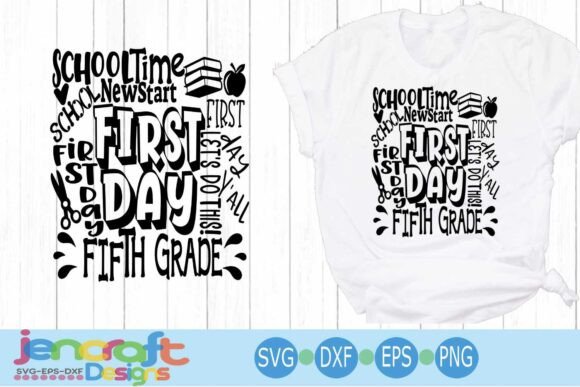
There is a real difference between a design that is an original creation and one that has been copied, traced, or auto-converted. Original high-quality designs are built with clean paths, proper node placement, and intentional layering. They cut cleanly and smoothly because the creator tested them. JenCraft exclusive original designs, as mentioned in the product description, are an example of this kind of craftsmanship. When a seller takes the time to build a design from scratch, you get a file that behaves predictably in your software.
You are not just buying an image. You are buying a digital tool that must perform under specific conditions. Treating your purchase with that mindset will help you choose better files and get better results.
A Final Word on the First Day of Fifth Grade
Whether you are making a shirt for your own child, creating a gift for a student, or producing inventory for your small business, the First Day of Fifth Grade SVG designs available today give you tremendous creative freedom. The key is to approach the process with a clear understanding of file formats, layering, and the specific requirements of your cutting or sublimation method.
Avoid the common mistakes. Check your file before you cut. Use the right format for your machine. And never assume a design will work perfectly out of the box until you have confirmed the details. With the right file in your hands, that first day of fifth grade project will come together smoothly and look exactly as you imagined.