Funny School Supply Cartoon Character: What to Watch For Before You Download, Design, or Print
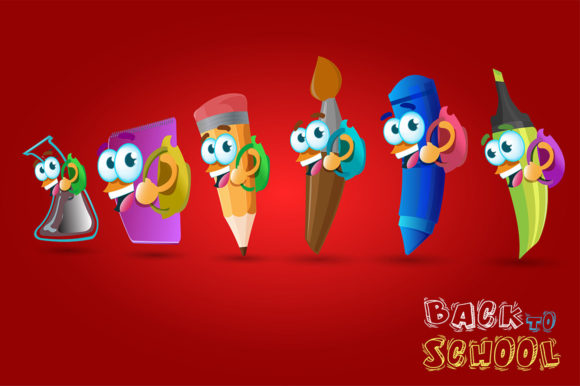
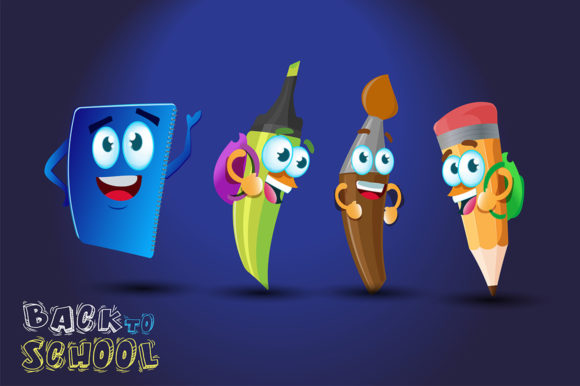
There is a certain charm in a pencil that has seen too many sharpeners, a backpack that looks like it hasn't slept, or a calculator with a personality. That is the appeal of a funny school supply cartoon character. These designs have become incredibly popular for everything from classroom decorations to small business branding. But the moment you decide to use one for your project, common pitfalls emerge. Many creators assume that finding a funny vector design is simple, and then they run into problems with scaling, formatting, or licensing that could have been avoided. The goal is not just to find something cute, but to find something that works across the many places you intend to use it: T-shirts, invitations, book covers, YouTube banners, posters, mugs, business cards, websites, children’s games, and more. Let us walk through what tends to go wrong, and how you can make confident decisions from the very start.
Why a Vector File Matters More Than You Think
One of the most common misunderstandings is thinking that any high-resolution image will do. You might receive a JPEG that looks crisp on your screen, but the moment you try to enlarge it for a poster or a banner, it becomes blurry or pixelated. This happens because raster images rely on a fixed number of pixels. When you scale them up, the software has to guess the missing information, and the result is usually disappointing. That is why a proper funny school supply cartoon character back to school VECTOR is essential. Vector files are built using mathematical paths rather than pixels, which means you can resize them to the size of a billboard or shrink them down to a business card without losing any sharpness. When you see a product that offers a ZIP file containing vector formats such as SVG, EPS, and AI, that is a strong signal that the designer understands professional needs. These formats give you full control over edits, color changes, and scaling, making them far more flexible than a simple JPEG or PNG.
Quality Breakdowns That Hurt Your Project
Another area where people get tripped up is assuming that all files labeled as high quality are equally good. You will often find designs that look fun on screen but have messy outlines, uneven line weights, or hidden layers that cause trouble when printed. A well-drawn cartoon character should have clean curves, consistent stroke sizes, and logical groupings. If you intend to use the design for a T-shirt or a mug, the printer may charge extra or refuse a file that is not properly formatted. When the product description mentions a High Quality JPEG with 300 DPI, that is a good starting point for preview purposes. But the real work happens in the vector files. Open the AI or EPS file in Adobe Illustrator or a similar vector editor, and check that the layers are named clearly, that the colors are separated if needed, and that no stray anchor points exist. Spending a few minutes inspecting the file now can save you hours of work later.
What to Check Before You Commit
Before you make any purchase or download, there are a few concrete things to verify. First, confirm that the ZIP file actually contains all the promised formats. Some sellers list SVG, EPS, and AI but only deliver a single EPS file that is difficult to open in non-Adobe software. Second, look for any mention of font embedding or text-to-outlines conversion. If the design includes text written in a particular style, that text should be converted to outlines so that you do not need to install a specific font on your system. Third, consider the color space. For digital projects like websites or YouTube banners, RGB is the standard. For printed items like posters, mugs, or business cards, CMYK ensures that the colors come out correctly on paper. A reliable vector product will either include both versions or clearly tell you what you are getting. If the listing only mentions RGB but you plan to print, ask the seller or look for an alternative set of files.
Overlooking the Match Between Design and Product Type
One mistake that affects both beginners and experienced creators is using a character that does not fit the product's context well. For example, a detailed cartoon with many small lines might look wonderful on a book cover but become illegible when printed on a small business card or an ID badge. Similarly, a design that relies on fine gradients may not translate well to a one-color screen print on a T-shirt. When you are considering a funny school supply cartoon character for multiple applications, think about simplifying the core shape before using it. Ask yourself: does this character still communicate its charm when reduced to two inches wide? Does it rely on text or tiny details that will disappear at small sizes? Many professional vector sets come with simplified versions or variations that are pre-optimized for small prints. If that is not offered, you can create a simplified version by removing unnecessary details while keeping the character's personality intact. That balance between detail and readability is what separates a design that just sits in a folder from one that actually gets used.
Licensing and Usage Rights Misunderstandings
There is also an often-overlooked aspect that can cause legal headaches later: usage rights. A design might be sold as a commercial product, but the license may restrict how you can use it. For example, some licenses prohibit using the artwork on merchandise that you resell, or they require attribution, or they limit the number of copies you can print. If you plan to use the cartoon character for branding, T-shirts, or a YouTube channel, read the license terms carefully. The phrase "for any creation that requires a touch of beauty" sounds generous, but the actual license might have limitations. When in doubt, reach out to the seller and ask for clarification in writing. A reputable file set will include a clear license file inside the ZIP folder alongside the vector files. Do not skip checking that document. It protects both you and the creator and ensures that your project remains on solid ground.
Practical Advice for Staying on Track
To get the most out of a funny school supply cartoon character back to school VECTOR design, start by planning where you will use it. List every medium: website, T-shirt, mug, poster, book cover, business card, YouTube banner, invitations, children's games, maybe even a quote page. Once you have that list, decide which vector format works best for each. SVG is excellent for web and responsive design because it is lightweight and scales perfectly in browsers. AI and EPS are ideal for professional print shops and further editing in tools like Adobe Illustrator or Affinity Designer. The included High Quality JPEG (300 DPI) is useful for quick mockups or social media posts where vector format is not required. By keeping all these files organized in one folder, you maintain the freedom to output to any medium without having to recreate the design from scratch.
Small Details That Make a Big Difference
Consider also the emotional tone of the character. Is the humor gentle and clever, or more over-the-top? If you are designing for children's games or educational materials, a character that feels friendly and mischievous but not chaotic will resonate better with both kids and parents. For a brand targeting teachers or parents, the character should feel relatable rather than distracting. The best vector designs offer flexibility in color and expression so that you can adapt them to different moods without losing the original spirit. If you find a design that includes multiple color variations or expression sheets, that is a treasure. It means you can swap out a grumpy pencil for a surprised one depending on the context, without having to redraw anything.
Final Checks Before You Hit Download
Make sure that the file you receive opens correctly in your software of choice. Some older vector files may not open in the latest version of a program, and some may require conversion. If you do not own Adobe software, free alternatives like Inkscape or Gravit Designer can handle SVG and sometimes EPS files, but be sure to test the compatibility first. A high-quality set will have been tested across common environments. Also, check the file naming. A disorganized set with vague names like "final.eps" or "new_copy.ai" can slow you down. A well-organized ZIP folder will have descriptive names and possibly a subfolder structure that separates print files from web files. That kind of attention to detail in the product often reflects the quality of the artwork itself.
Approaching a funny school supply vector design with these practical considerations in mind changes the experience from guessing to confident creating. You are not just picking a cute image. You are selecting a tool that can work across your T-shirt line, your website, your promotional posters, and your children's game. When the file set includes AI, EPS, SVG, and a high-res JPEG at 300 DPI, and when the license is clear and the vector paths are clean, you have everything you need. The character is the star, but the structure behind it is what allows that star to shine in every context you choose. Take the time to check the quality, the format, and the license now, and you will avoid the frustration of a design that fails when you need it most.