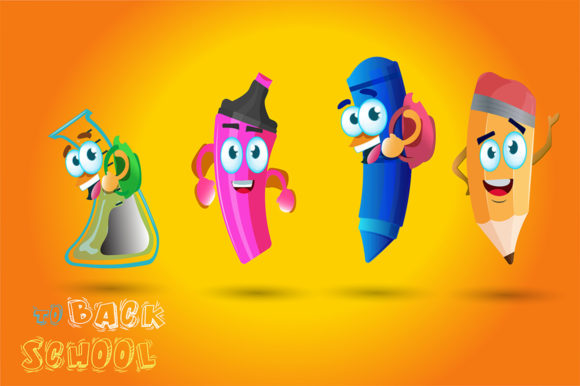
School Supplies Cartoon Kawaii Character: What to Know Before You Use These Vector Designs
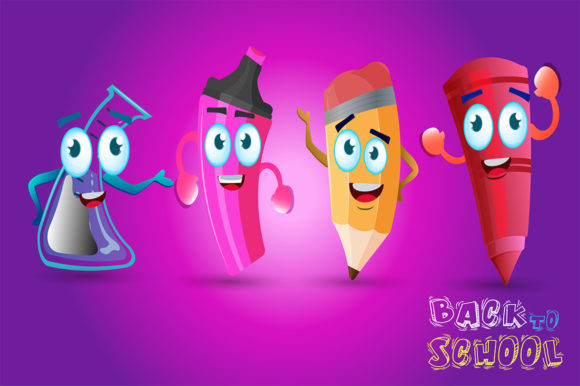
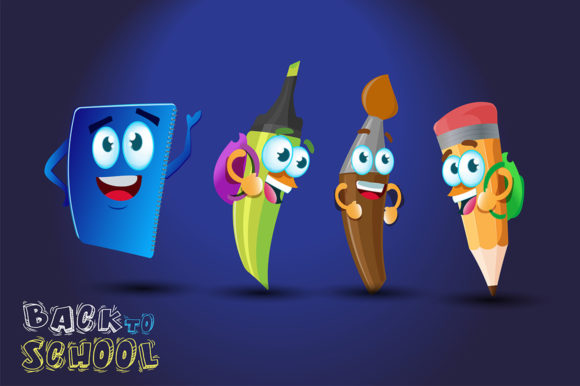
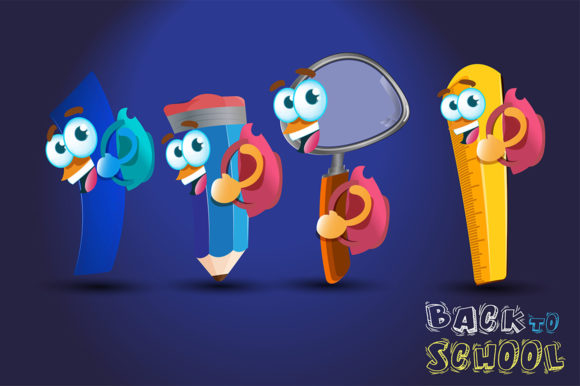
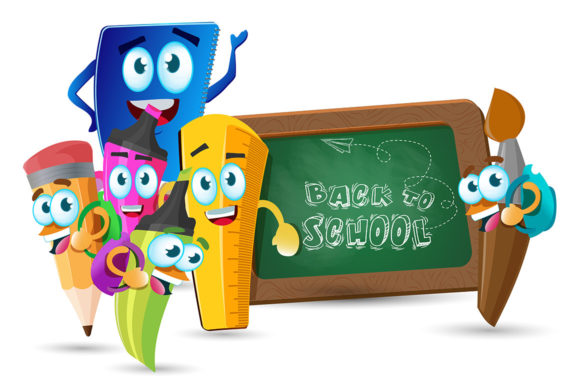
You have seen them everywhere: cheerful pencils with tiny faces, smiling books with rosy cheeks, and glue bottles that look like they just told a good joke. School Supplies Cartoon Kawaii Character designs have become a go-to visual language for anything related to education, creativity, and childhood. If you are a creator, marketer, educator, or small business owner, you have likely considered using one of these vector sets for a project, whether it is a T-shirt, a website banner, a book cover, or a mug.
The appeal is obvious. These designs are friendly, approachable, and they communicate warmth and fun almost instantly. But here is something that many people discover only after they have already committed time and money: using a Funny school supplies cartoon kawaii character back to school concept vector design well requires more than just picking a cute image and dropping it into a layout. There are several common mistakes that can turn a promising project into something that looks awkward, unprofessional, or simply ineffective. Let us walk through what those mistakes are, why they matter, and how you can sidestep them entirely.
Mistake #1: Choosing the Wrong File Format for Your Project
One of the most frequent oversights happens right at the beginning. You download a vector set and find a folder containing several file types: AI, EPS, SVG, and a high-resolution JPEG. It is tempting to grab the JPEG because it is easy to open and preview. For many applications, however, using a raster format like JPEG when you need scalability can lead to trouble.
Imagine you are designing a poster. You place the JPEG into your layout, and it looks crisp at the size you are working with. Then you decide to enlarge the image slightly to fill more space. Suddenly, the edges become blurry, and the once-adorable kawaii pencil looks pixelated and rough. That is because a JPEG, even at 300 DPI, has a fixed number of pixels. Enlarge it beyond its original dimensions, and you lose quality.
The better approach is to start with the vector format that matches your workflow. If you use Adobe Illustrator, the AI file gives you full control over every curve and color. If you prefer a more universal option, the SVG file works across many design tools and remains infinitely scalable. The EPS file is another solid choice for compatibility with older software. The JPEG, while useful for previewing or quick web use, should not be your primary working file if there is any chance you will need to resize or edit the artwork.
- Practical advice: Before you begin a project, decide which file format you will need. For print work that may require resizing, use the AI, EPS, or SVG file. For digital use where the exact size is fixed, the high-quality JPEG is fine, but always keep the vector version as a backup.
Mistake #2: Overlooking Scalability and Resolution in Print
Even seasoned designers sometimes forget that a vector that looks perfect on screen may not translate well to physical products. The School Supplies Cartoon Kawaii Character designs are provided as vectors, which means they are resolution-independent in theory. In practice, however, how you export or save the file matters a great deal.
If you take the SVG file and convert it to a low-resolution PNG for a T-shirt print, you are throwing away the main advantage of the vector format. The result may appear fine on your monitor but come out fuzzy or jagged on fabric. Similarly, if you use the AI file but export it at 150 DPI for a large poster, the final printed product will lack the sharpness that gives these characters their clean, professional look.
The high-quality JPEG that comes with these vector sets is rendered at 300 DPI, which is suitable for most print applications up to a certain size. But if you need something larger than what the JPEG was designed for, you must go back to the vector source and export at the correct resolution for your specific output.
- Practical advice: Always confirm the final output size and required DPI before exporting. For large format prints, use the AI or EPS file and export at 300 DPI or higher. For small items like business cards or stickers, the included JPEG may be sufficient, but verify by printing a test sample first.
Mistake #3: Ignoring the Context and Audience
It is easy to fall in love with a cute character and want to use it everywhere. But a Funny school supplies cartoon kawaii character back to school concept vector design is not a one-size-fits-all solution. The same smiling eraser that works perfectly for a children’s birthday invitation may feel out of place on a professional business card or a serious educational brochure for adults.
One common error is using these characters without considering the tone of the overall project. If you are creating materials for a preschool, the bright, playful energy of kawaii school supplies is a natural fit. If your audience includes college students or professional educators, however, the same design might come across as too childish unless it is balanced with clean typography and a more restrained layout.
Another overlooked detail is cultural context. Kawaii aesthetics are widely loved, but they carry different connotations in different markets. In some settings, the exaggerated cuteness may be perceived as frivolous rather than friendly. Understanding your specific audience can prevent a mismatch between your intended message and the reaction you actually get.
- Practical advice: Before applying the design, ask yourself who will see it and what impression you want to make. For products aimed at young children or family-oriented events, lean into the full kawaii charm. For more general audiences, use the characters as accent elements rather than the main focus, and pair them with straightforward layouts and fonts.
Mistake #4: Neglecting Color Matching and Consistency
The colors in a vector design file are not always what you get when you print or display them on another device. The School Supplies Cartoon Kawaii Character vectors are created with specific color values, but if you open the AI file in a program that uses a different color profile, or if you print on a material that alters the hues, the cheerful pastels can shift into something less appealing.
I have seen projects where a soft pink pencil case turned into a dull salmon on a T-shirt, or a bright blue book became a muddy teal on a poster. These shifts happen because of mismatched color spaces, uncalibrated monitors, or printer profiles that are not aligned with the file’s original settings.
Furthermore, if you are using multiple elements from different vector sets, you may find that the “same” color across files does not match exactly. Even a slight difference in hue can make a design look disjointed.
- Practical advice: Stick to one vector set per project to maintain color consistency. If you need to modify colors, do so in the AI or EPS file using global swatches so that changes apply uniformly. Before committing to a large print run, do a small test print on the actual material you plan to use. Also, ensure your monitor is reasonably calibrated so that what you see is closer to what you get.
Mistake #5: Skipping Customization and Personalization
A vector set is a starting point, not a finished product. One of the biggest mistakes I see is people using the design exactly as it comes from the download, without making any adjustments for their specific brand or message. The result is something that looks generic, like it could have been used by anyone.
For example, if you are creating a YouTube banner for a channel about fun learning activities, dropping a stock kawaii backpack image onto the banner without adding your channel name, unique color palette, or any additional visual context will feel incomplete. The viewer may not connect the image to you or your content.
Customization does not have to be complicated. Simple changes like recoloring a character to match your brand, adding a text overlay in a font that fits your style, or combining multiple characters into a small scene can transform a generic vector into something that feels personal and intentional.
- Practical advice: Treat the vector files as raw materials. Open the AI or EPS file and experiment with color changes, rearrangements, or additions of your own text and graphics. Even small tweaks can make a large difference in how unique and professional the final piece looks. If you are not comfortable editing vectors yourself, hire a freelance designer for a quick customization session, it is often worth the investment.
Mistake #6: Forgetting About Licensing and Usage Rights
This is a detail that many beginners and even some professionals overlook. Vector design sets come with specific usage terms. Some allow unlimited commercial use, others restrict how the designs can be distributed, and a few require attribution. Assuming that you can do whatever you want with the files because you bought them is a common and potentially costly misunderstanding.
If you are using the School Supplies Cartoon Kawaii Character vectors for a product you intend to sell, such as T-shirts or mugs, you need to confirm that commercial use is permitted under the license. If you plan to share the original files with others or include them in a template pack you sell, that is almost certainly not allowed unless stated explicitly.
Ignoring these terms can lead to legal headaches, takedown notices, or loss of revenue if your products are removed from a marketplace. It is a straightforward thing to check, yet many people skip it.
- Practical advice: Read the license file included with your download before you do anything else. If the terms are unclear, contact the seller or creator for clarification. Keep a copy of the license in your project folder so you can refer back to it if questions arise later. When in doubt, assume the most restrictive terms apply until you confirm otherwise.
Putting It All Together: Smart Use from Start to Finish
Using a Funny school supplies cartoon kawaii character back to school concept vector design can be a delight. These illustrations bring energy and personality to projects that might otherwise feel flat. The key is to approach them with the same care you would give any other design asset.
Start by selecting the right file format for your workflow and output needs. Verify that you understand the resolution and scalability requirements for your specific project. Consider your audience and the context in which the design will appear. Match colors carefully and test your output before going to full production. Take the time to customize the vectors so that they reflect your unique brand or message. And always, always check the license terms to ensure you are using the files appropriately.
When you attend to these details, the result is a project that looks polished, communicates effectively, and makes the most of the charm and versatility that these vector designs offer. Whether you are creating a T-shirt, a website banner, an invitation, a book cover, a mug, or a YouTube banner, the effort you put into avoiding these common mistakes will pay off in higher quality, greater satisfaction, and a final product that stands out for all the right reasons.
The vectors themselves give you a fantastic foundation. Your job is to build on that foundation with intention and care. Do that, and you will get the best possible result from every design you create.