Vector School Supply Cartoon Character: A Practical Guide to Choosing and Using Kawaii Back-to-School Designs
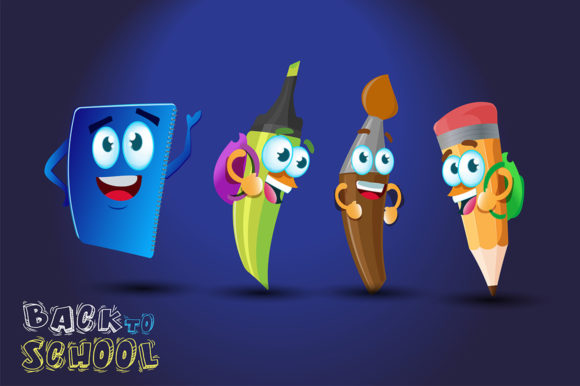
If you’ve ever searched for back-to-school graphics, you’ve likely stumbled across the Vector School Supply Cartoon Character style. These playful, kawaii-inspired designs featuring smiling pencils, cheerful backpacks, and adorable erasers have become a go-to for creators, educators, and small business owners. The appeal is obvious: they add warmth, personality, and a touch of fun to any project. But using these vectors effectively requires more than just picking the cutest file. Many people jump in without understanding key details about formats, licensing, or practical application—and the results often fall short of what they imagined.
This article walks through the most common mistakes people make when choosing and using a cool funny school supply cartoon character kawaii back to school vector design, and offers straightforward advice to help you get the best outcome every time.
Mistake One: Choosing a Low-Resolution Design That Can’t Scale
One of the most frequent errors is selecting a graphic that looks crisp on screen but becomes blurry or pixelated when printed or displayed larger. This happens when people download a standard JPEG or PNG without checking whether the file is actually a vector. A true vector file—such as AI, EPS, or SVG—is resolution-independent, meaning you can scale it to fit a poster, a billboard, or a tiny bookmark without losing quality.
When a design is labeled as a Vector School Supply Cartoon Character, you should expect vector formats. But not all marketplaces or sellers deliver what they promise. Before purchasing, confirm that the download includes an AI file, EPS file, and SVG file. These three formats ensure you can edit, scale, and customize the design in programs like Adobe Illustrator, Inkscape, or even some browser-based editors. If the product only offers a low-resolution JPEG, you will likely run into problems when printing on large surfaces like banners or mugs.
Practical tip: Look for products that also include a high quality JPEG file with 300 DPI. This gives you a ready-to-use preview while the vector files handle your production needs. If the listing only shows a small preview image and no mention of vector formats, move on.
Mistake Two: Ignoring License Terms and Usage Rights
Another oversight that can cause real headaches is assuming that all vector designs come with blanket permission for any use. Many creators, especially beginners, download a design and immediately use it on T-shirts, YouTube banners, or business cards without reading the license. Some vectors are only licensed for personal use, or they require attribution. Others explicitly forbid commercial applications like selling merchandise or using the design in branded materials.
If you plan to use a cool funny school supply cartoon character kawaii back to school vector design for a product you intend to sell—like a T-shirt line or a set of mugs—you need a commercial license. Some sellers offer an extended license at an additional cost. Ignoring this can lead to legal issues or having your product listings taken down.
Better approach: Before clicking buy, look for the licensing details. If the product page is vague, contact the seller directly. Keep a copy of the license after purchase. This simple step protects your work and your business, and it gives you peace of mind when sharing your designs online or in print.
Mistake Three: Overlooking File Format Compatibility
Even when you have the right vector formats, you need to check whether your software can open them. AI files are native to Adobe Illustrator, EPS files are more universal but can be finicky in older software, and SVG files are widely supported across web and design tools. If you’re using free or open-source software, SVG is usually your safest bet. Some users download an EPS file only to find their program cannot render it correctly, leading to missing elements or broken paths.
How to avoid this: Check the product description for format details. A good listing will clearly state: “You will be able to download a High Quality design, zip file of this product in VECTOR FILES High quality JPEG file with 300 DPI. SVG file EPS file AI file.” If you see this, you know exactly what you are getting. Then, test the file in your preferred software as soon as you download it. If you cannot open it, you have time to request a refund or ask the seller for help.
Mistake Four: Not Considering the End Use Before Choosing a Style
It’s easy to fall in love with a design that looks adorable on screen but feels out of place once applied. For example, a highly detailed vector with tiny expressions and intricate linework might look wonderful on a poster but could lose clarity when printed on a mug or a small business card. Similarly, a design that works perfectly for a children’s game might feel too playful for a professional YouTube channel targeting educators.
Ask yourself these questions before you download:
- Where will this design appear most often? On a website header, a T-shirt, a book cover, or a branded invitation?
- How small or large does the design need to be? Fine details may not survive small-scale printing.
- Who is the audience? A kawaii style might resonate with younger children or niche communities, but could feel mismatched in a formal educational context.
For instance, if you’re designing a back to school vector design for a teacher’s blog, consider a style that is friendly but still professional—perhaps a smiling pencil or a cheerful globe. If you’re making stickers for students, go ahead and embrace the full kawaii aesthetic. Matching the design to the medium and audience avoids wasted effort and ensures your project communicates the right tone.
Mistake Five: Skipping the Color and Brand Consistency Check
Another overlooked detail is how the vector’s colors interact with your existing brand palette or the background where the design will appear. A vibrant cartoon pencil with neon hues might clash with a muted, pastel-themed website. Or a design that looks great on a white background might disappear against a dark-colored T-shirt.
What to do instead: Choose vectors that come in editable file formats—AI, EPS, or SVG—so you can adjust colors if needed. Many high-quality sets include multiple color variations or allow easy recoloring. If you are using the design for a business card, test a small print sample first. If it is for a website, mock it up on your page before finalizing. This is especially important for entrepreneurs and small business owners who want to maintain consistent visual branding across products, from book covers to YouTube banners to invitations.
Mistake Six: Forgetting to Check the Package Contents Thoroughly
You see a listing that promises a “zip file” with multiple formats, but when you download it, you find only one JPEG and an EPS that is corrupted. This happens more often than you might think. Some sellers use generic descriptions, and the actual product may not match what was advertised.
How to protect yourself: Read customer reviews and look for feedback about file quality. Reputable sellers will clearly list everything included: vector files (AI, EPS, SVG), a high resolution JPEG at 300 DPI, and a organized zip folder. If the listing is vague or has no reviews, consider choosing a more established source. Once you download, unzip the folder immediately and check each file. If something is missing or broken, contact the seller right away—most reputable creators will fix the issue or issue a refund.
Mistake Seven: Assuming the Design Works for Every Product Type
One of the biggest misunderstandings is that a single vector file will automatically look good on every product. A design optimized for a flat surface like a poster or book cover may need adjustment for curved surfaces like mugs or for fabric textures on T-shirts. Some designs require special handling—like separating colors for screen printing or adding a white underbase for dark garments.
Practical advice: If you are printing on merchandise, talk to your print provider early. Ask whether they need a specific file format (many prefer SVG or AI) and whether the design needs to be converted to layers or separated by color. For DIY projects, use vector editing software to resize and position the design precisely. A Vector School Supply Cartoon Character set that includes SVG files is especially useful here because SVG is widely accepted by print-on-demand services and cutting machines.
Making the Right Choice from the Start
Selecting a cool funny school supply cartoon character kawaii back to school vector design does not have to be complicated. The key is to approach it with a clear understanding of what you need, where the design will be used, and how the files should perform. By avoiding the common pitfalls—low resolution, licensing confusion, format incompatibility, mismatch with your audience or brand, and lack of testing—you save time, money, and frustration.
Whether you are creating for a T-shirt, website, invitations, book covers, children’s games, quotes, titles, brand names, posters, mugs, business cards, or a YouTube banner, the same principles apply. Look for a product that clearly states it includes vector files in AI, EPS, and SVG formats, plus a high quality JPEG at 300 DPI. Read the license, check the package contents, and test the design on your intended medium before committing.
When you choose wisely, these playful, expressive characters become a genuine asset. They add warmth and personality to your work without causing technical headaches. The right Vector School Supply Cartoon Character can elevate everything from a classroom decoration to a product line—but only if you know what to look for and how to use it well.
Take the extra few minutes to verify formats, licenses, and compatibility. Your projects will be better for it, and you will avoid the disappointment of a design that looks great in theory but fails in practice. That is the difference between a quick download and a smart investment in your creative toolkit.